
Safe underfoot: preventing slips on timber decks
Monday, August 24, 2026
Preventing slips on timber decking starts long before the first board is installed. Good design, selecting the right materials, regular cleaning and ongoing maintenance all play an important role in creating a safe external surface.
No decking material can be guaranteed to remain slip resistant in every condition. Rain, frost, algae, moss and leaves can all affect the performance of the deck over time. That's why preventing slips should be considered throughout the life of the installation, not just at the specification stage.
Start with good design practice
The design of the deck can have a significant impact on safety. Consider:
- The intended use of the deck and expected foot traffic.
- Drainage to prevent standing water.
- Shaded areas that may encourage moss and algae growth.
- Appropriate lighting where the deck will be used after dark.
- Access points, ramps and changes in level.
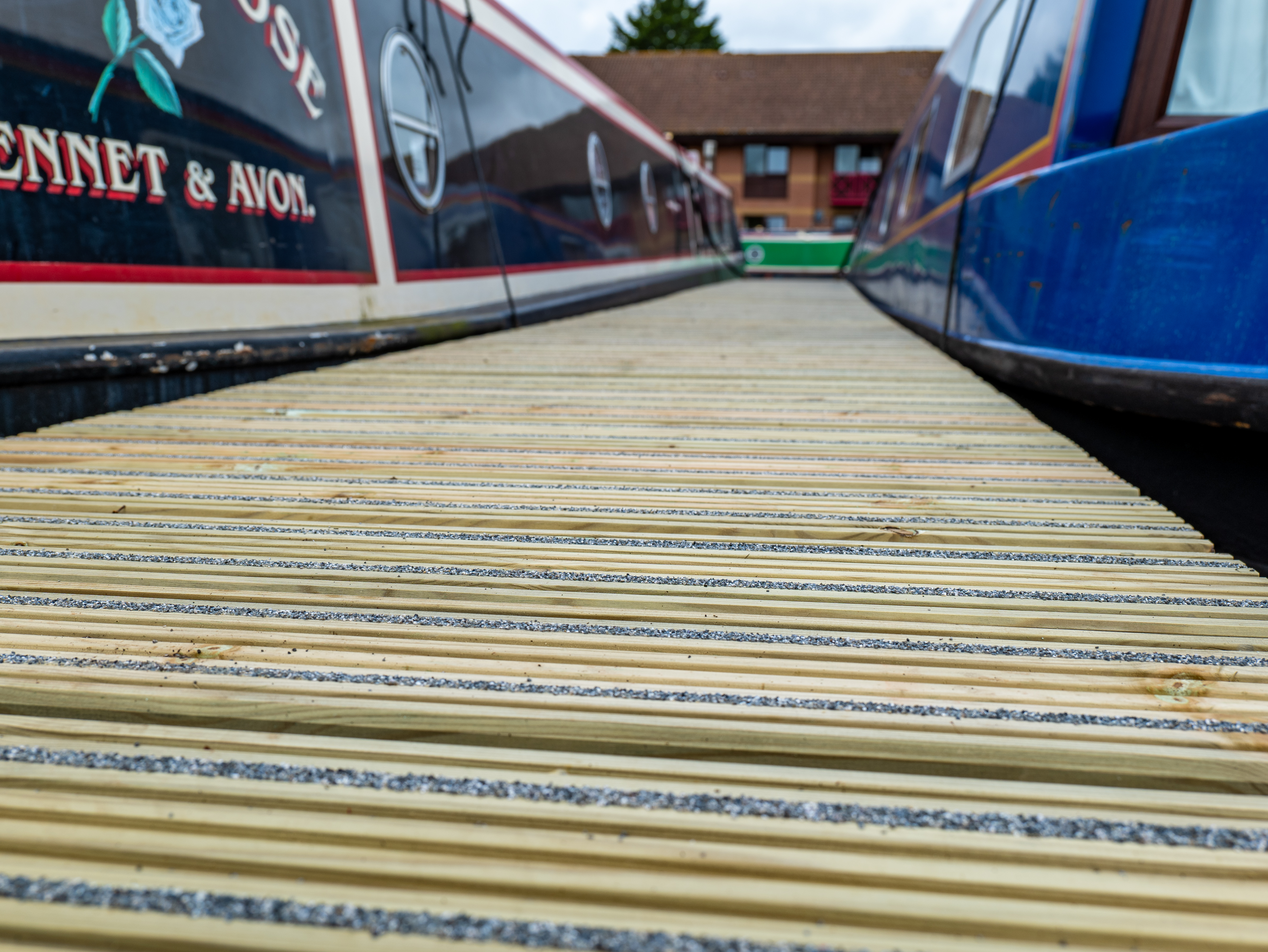
Designing with these factors in mind helps reduce the likelihood of slips before maintenance even becomes a consideration.
TDCA recommend that a deck should be:
- A free draining and well-ventilated structure
The organisms responsible for slipperiness – moulds, algae and mosses – like damp conditions. Ensure your deck sheds water and dries out quickly to keep them at bay. - Constructed using fit for purpose products that are correctly specified
Choose timber types suitable for use outdoors and capable of giving at least 15 years’ service life. This applies to both the deck surface and supporting substructure.
Cleaning and maintenance matter
Even the best designed decks require maintenance from time to time.
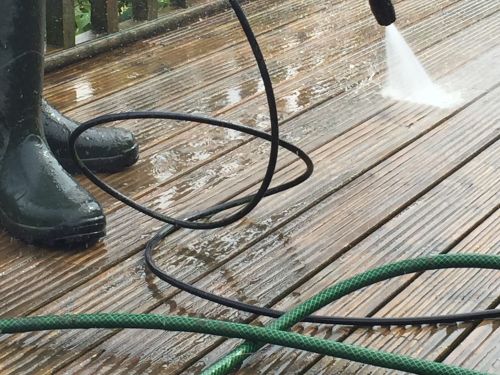
Dirt, leaf litter, algae, moss and other organic growth can reduce the slip resistance of any external surface. Regular cleaning, inspection and maintenance should be carried out to help maintain the deck's performance throughout its service life.
It is advisable to increase cleaning frequency in areas where decks are exposed to heavy foot traffic or particularly damp, shaded environments.
For practical guidance on keeping your deck safe, clean and performing at its best, read the TDCA's Deck Maintenance guide Deck Maintenance | TDCA
Are "slippery when wet" signs enough?
A "slippery when wet" sign should not be relied upon as the primary method of preventing slip accidents.
While warning signs may be appropriate as a temporary measure during cleaning or immediately following severe weather, they do not reduce the likelihood of someone slipping. Instead, they simply warn users that a hazard already exists.
If a surface is known to present a slip risk in normal use, relying solely
on signage is unlikely to be an adequate control measure. In fact, permanently displaying a warning sign can indicate that the property owner is aware of an ongoing slip hazard but has not addressed the underlying cause.
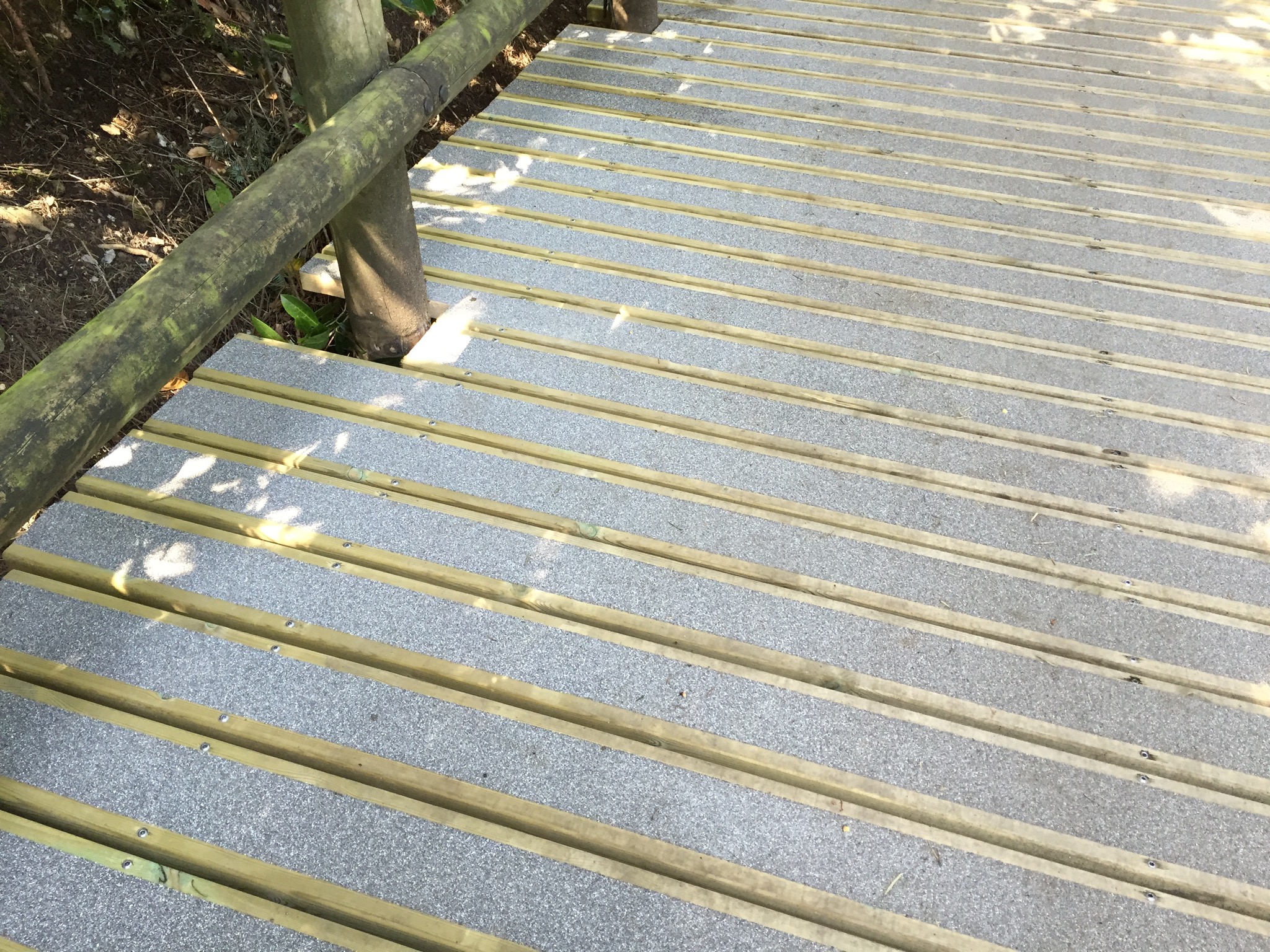
The most effective approach to eliminate or minimise the risk is through good design, keeping the surface clean and well maintained, and, where appropriate, specifying products with independently verified slip resistance performance.
For practical advice on maintaining your timber deck, see our ‘How to keep your deck looking good’ guide, available to download from our publications library.
When extra assurance is needed
For commercial projects, public spaces, high foot traffic areas and ramps, specifiers may require additional evidence that a decking product is capable of providing suitable slip resistance.
In these situations, independently verified slip resistance testing can provide greater confidence during the specification process.
Understanding Pendulum Test Values (PTV)
For commercial projects, public spaces and other high-use environments, it is often necessary to demonstrate that a decking product has been independently tested for slip resistance.
The recognised method for assessing slip resistance in the UK is the HSE’s preferred method the Pendulum Test, which produces a Pendulum Test Value (PTV). The test measures the friction between a standardised rubber slider and the decking surface to assess its potential slip risk under controlled conditions.
The UK Slip Resistance Group (UKSRG) classifies slip potential as:
- PTV 36 and above – Low slip potential
- PTV 25–35 – Moderate slip potential
- PTV 24 or below – High slip potential
A minimum wet PTV of 36 is generally accepted as the benchmark for low slip potential.
When comparing products, always ask to see the test evidence. A certificate from an accredited independent laboratory should be available to support any slip resistance claims made by the manufacturer. Independent testing provides specifiers and clients with confidence that the published performance has been verified using recognised test methods.
For public access spaces, where safety is paramount, routine onsite slip testing should be considered. Visit the UK Slip Resistance website for slip testing service providers UK Slip Resistance.
Looking for independent assurance
For projects where enhanced performance evidence is required, choose products from manufacturers holding DeckMark and DeckMark Plus certification.
TDCA’s DeckMark scheme demonstrates that a product meets recognised standards. DeckMark Plus goes a step further, identifying products that have undergone additional technical performance assessments beyond the core requirements. These independent evaluations can provide specifiers with greater confidence when selecting products for demanding applications.
TDCA recommends choosing accredited products, following the correct installation guidance and implementing an appropriate maintenance programme to help reduce the risk of slip accidents throughout the life of the deck.
For a list of accredited manufacturers, visit our member directory and look for companies holding DeckMark or DeckMark Plus accreditation Reliable Timber Cladding and Decking Suppliers UK
Further guidance
For comprehensive guidance covering design, specification, installation, maintenance and best practice, consult the TDCA Decking Handbook. Whether you're a specifier, contractor or homeowner, our handbook provides practical advice to help ensure timber decking performs safely and effectively throughout its life Publications.
See slip-resistant decking in practice
The importance of selecting decking with appropriate slip resistance is particularly evident in commercial and public-access environments, where decks may be exposed to high levels of foot traffic, wet conditions or challenging surroundings.
We have a number of case studies demonstrating how members have addressed these requirements using slip-resistant decking products, including:
- Aqua Park Deck and Viewing Area – Gripsure Classic Decking – a high-use, wet leisure environment where reliable slip resistance was a key consideration.
- English Heritage – Grimes Graves – GripDeck – a specialist public-access installation using bespoke anti-slip decking to meet the site's safety and performance requirements.
- Garton-on-the-Wolds Primary School – DeckWright – approximately 300 linear metres of anti-slip decking installed around a school, including a ramp and play area.