
Understanding Chemically Modified Timber
Thursday, November 12, 2026
The UK market for exterior timber has evolved rapidly over the past decade. Alongside traditional preservative-treated softwoods and naturally durable hardwoods, chemically modified timber has become an increasingly important option for decking, cladding and other outdoor applications.
For architects, landscapers, contractors and homeowners, the attraction is clear: improved durability, greater dimensional stability and longer service life, while continuing to use responsibly sourced timber.
The Timber Decking & Cladding Association (TDCA) is pleased to have members representing two of the leading chemically modified timber technologies used in the UK market – Accoya® and Kebony®. Although the two products are created using different modification processes, they share a common objective: to enhance the performance of sustainably sourced timber for demanding exterior applications.
What is chemically modified timber?
Chemically modified timber is wood that has been permanently altered at a cellular level to improve its performance. Unlike conventional preservative treatments, which protect timber by introducing biocides, chemical modification changes the structure of the wood itself, reducing its ability to absorb moisture and increasing its resistance to rot/decay.
The result is timber that typically offers:
- Enhanced durability.
- Improved dimensional stability.
- Reduced swelling and shrinkage.
- Better long-term performance in exterior applications.
- Greater design flexibility for decking and cladding projects.
The fundamental principle is straightforward: timber must remain sufficiently moist for decay fungi to develop. In practice, it is impossible to keep exterior timber consistently below around 20% moisture content, but chemical modification significantly reduces the wood's ability to absorb moisture. By limiting moisture uptake, these technologies address one of the key conditions required for fungal decay, improving durability and long-term performance.
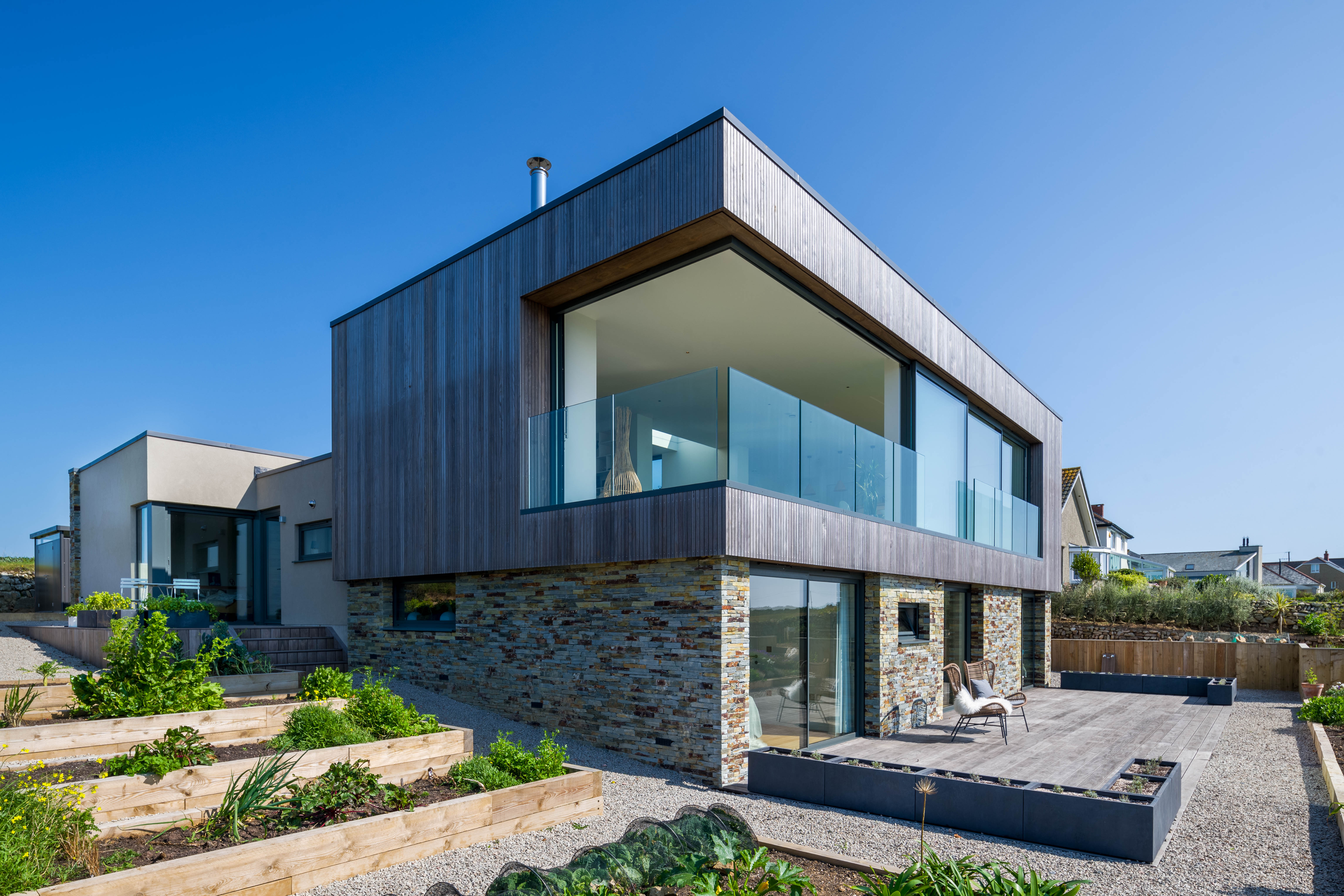
| Characteristic | Accoya / Accoya color | Kebony |
|---|---|---|
| Modification process | Acetylation | Furfurylation |
| Base timber | FSC® Certified (CO12330) Radiata pine | Radiata or Scots pine |
| Key strength | Dimensional stability (also improves coating performance) and durability | Hardness and durability |
| Appearance when new | Two options: Blond ideal for coating or grey in colour, all the way through to the core. | Rich brown |
| Typical weathering | Silver-grey / Accoya Color maintains its grey appearance over time, developing only a light patina rather than changing colour. | Silver-grey |
| Exterior uses | Cladding, decking, joinery, landscaping – above or in ground and freshwater contact / Accoya is particularly suited to cladding and decking. | Decking, cladding, landscaping, furniture and joinery (above ground only) |
| Published warranty | 50 years above ground / 25 years in ground or freshwater contact | Up to 35 years |
PART 1 – Accoya - modification through acetylation
Accoya is a modified wood product manufactured by Accsys using a process called acetylation. During manufacture, the wood's naturally occurring hydroxyl groups are converted into acetyl groups, significantly reducing the timber's ability to absorb water.
Accoya is particularly well known for its exceptional dimensional stability, making it suitable for applications where movement control is especially important, including:
• High-performance cladding.
• Decking.
• Windows and doors.
• Joinery.
• Exterior architectural applications.
Accoya Colour
Accoya Colour is the colour-through, high-performance version of Accoya engineered for premium cladding and decking where long-term stability, low maintenance, and a contemporary aesthetic matter.
How is Accoya made?
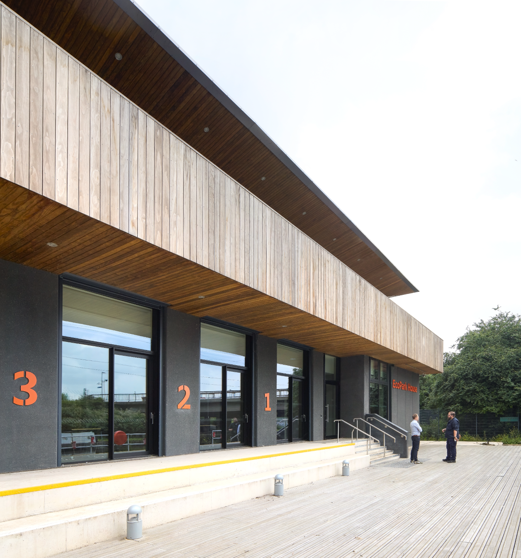
The manufacturing process is relatively elegant from a chemistry perspective.
• The timber is kiln-dried.
• It is placed in a pressure vessel.
• The wood is treated with acetic anhydride, a chemical derived from acetic acid (the acid found in vinegar).
• The naturally occurring hydroxyl (–OH) groups in the wood cell walls are converted into acetyl groups (–OCOCH₃).
• Excess reagent is recovered and reused, and the main by-product of the reaction is acetic acid (vinegar).
During manufacture, the wood's naturally occurring hydroxyl groups are converted into acetyl groups, significantly reducing the timber's ability to absorb water. The modification affects a permanent change to the wood’s structure.
What properties are improved?
Accoya is particularly valued for:
• Exceptional dimensional stability — swelling and shrinkage are greatly reduced.
• High durability against fungal decay.
• Reduced risk of distortion, cupping, twisting and checking.
• 60-year service life in exterior environments.
The reduction in movement is the property that often distinguishes Accoya from many other timber products. In practical terms, cladding boards are less prone to opening joints and cupping, and decking boards generally experience less seasonal movement than conventional softwoods.
One of the features that has contributed to the growing use of chemically modified timber is the availability of long manufacturer-backed warranties. Accoya is supplied with a published warranty of 50 years for above-ground use and 25 years for in-ground or freshwater contact, reflecting the durability and dimensional stability achieved through the acetylation process.
Typical applications
Accoya is used in a wide range of exterior products, including:
• Cladding and facades
• Decking
• Windows
• External doors
• Joinery
• Bridges and boardwalks
• Outdoor furniture
• Landscaping structures
It is particularly popular in high-performance architectural projects, where tight tolerances, coatings durability or movement control are important.
Sustainability
One of Accoya's strongest selling points is that it uses rapidly renewable plantation-grown timber and converts it into a high-performance exterior material.
The process is often cited as an example of adding value through wood modification rather than harvesting naturally durable tropical hardwoods. Accoya contributes to multiple environmental certification schemes, and low-carbon construction projects because of the combination of renewable raw material and long service life.
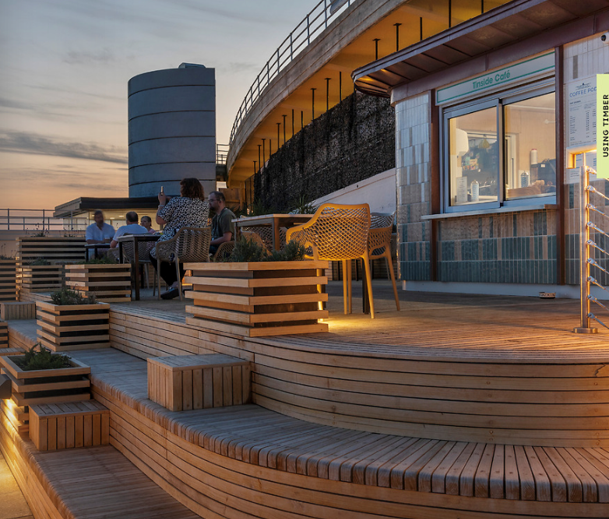
PART 2 – Kebony – modification through furfurylation
Produced using a process known as furfurylation, Kebony is a modified timber product developed in Norway in the late 1990s and commercialised during the 2000s.
Kebony is created through a dually modified process in which the bio-based liquid reduces the wood’s water sensitivity, whilst the drying/curing process increases the wood’s cell structure by 50%.
Sustainably sourced softwood is impregnated with furfuryl alcohol, a bio-based liquid derived from agricultural by-products, and then heat-cured so that the material polymerises within the wood structure.
This process produces a timber with increased hardness, durability and stability, together with a rich brown appearance that gradually weathers to a silver-grey if left untreated.
It is often used as an alternative to tropical hardwoods in decking, cladding, boardwalks, and marine structures.
Kebony is commonly used for:
• Decking.
• Cladding.
• Boardwalks.
• Bridges.
• Public realm projects.
• Waterfront and landscaping applications.
• Outdoor furniture and joinery
How is Kebony made?
1. Timber selection
- FSC-certified softwoods are used: Radiata pine and Scots pine.
- The timber is kiln-dried before treatment.
2. Impregnation with furfuryl alcohol
- The wood is impregnated under vacuum and pressure with a liquid containing furfuryl alcohol.
- Furfuryl alcohol is derived from agricultural waste products such as sugar cane bagasse, corn cobs, and other plant residues.
3. Polymerisation
- The treated timber is heated in a curing process.
- The furfuryl alcohol polymerises within the wood structure, becoming a stable polymer locked into the cell walls and lumens.
- This permanently modifies the wood, significantly enhancing durability and service life.
4. Finishing
- The timber is dried and machined as required.
- Freshly produced Kebony has a rich brown colour an aesthetic that associates with tropical hardwoods.
| Product | Kebony Clear | Kebony Character |
|---|---|---|
| Species | Produced from FSC® certified radiata pine | Produced from PEFC® certified radiata pine |
| Appearance |
Dark brown and primarily with a clear, knot free front surface Grey and black options also available |
Dark brown with knots for a more rustic appearance Grey and black options also available |
| Treatment level | Treated throughout, to the core of the board. | Sapwood only, heartwood is not modified during the process therefore any crosscut, notched or bored components must be treated with and end-grain sealing wax or equivalent |
| Durability class | 1 (60-year desired service live above ground) | 1-2 (30 – 60-year desired service live above ground) |
| Warranty | Up to 35 years against rot for above ground use | Up to 30 years against rot for above ground use |
| Uses | Above ground, outdoor use – Use Class 3.1 so ideal for decking and cladding | |
Different technologies, similar objectives
Although Accoya and Kebony are produced using different chemistry, they share a common objective: to improve the performance of sustainably sourced timber for demanding exterior environments. Their premium positioning reflects the significant enhancement in durability, stability and service life that chemical modification can deliver.
As with any decking or cladding product, long-term performance still depends on good design, appropriate detailing, ventilation, drainage, suitable fixings and competent installation. Chemically modified timber should therefore be viewed as part of a well-designed external timber system rather than as a substitute for good construction practice.
The TDCA is pleased to have members representing both of these leading technologies and remains committed to providing independent technical guidance, balanced information and best-practice advice across the decking and cladding sector. In a future article we will explore thermally modified timber, another important wood modification technology that is becoming increasingly significant in exterior timber specification.