
From Concern to Clarity: How independent inspection services from TDCA can help
Friday, March 27, 2026
The Timber Decking & Cladding Association (TDCA) is the UK’s leading authority on best practice for timber decking and cladding design, specification, installation and maintenance.
Through technical guidance, industry standards and accreditation schemes like DeckMark and CladMark, the TDCA supports specifiers, installers and homeowners to achieve high‑quality, durable timber structures.
When projects don’t go to plan, the TDCA’s Inspection & Expert Witness Service provides independent, professional assessment and reporting. This service is ideal when there are performance concerns, defects or disputes, helping to identify causes, recommend remedial actions and provide clarity to clients, contractors and insurers alike.
Case Study
We were recently appointed to carry out an inspection of a residential cladding installation where the homeowner was concerned about decay and splitting in the timber. The aim of the inspection was to determine the cause of the reported defects and offer clear, actionable recommendations.
Background
The homeowner contacted us after observing splitting and decay in several cladding boards after 7 – 8 years. The cladding was untreated larch, coated black with a black wood stain maintained annually with re-coating. Stainless steel fixings had been used.
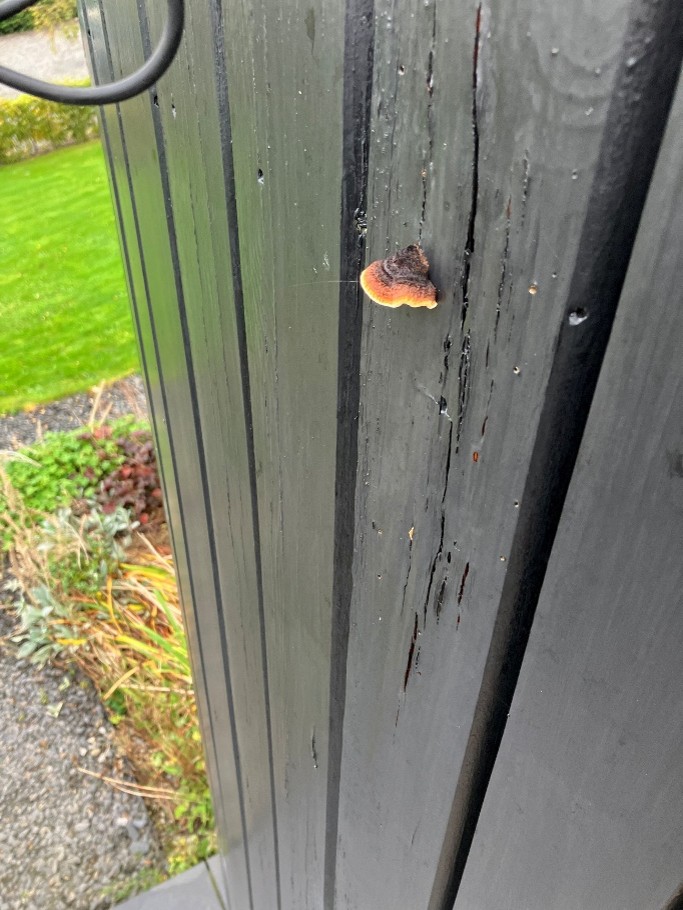
Several boards showed splits along the grain and signs of fungal growth, leading the homeowner to fear that the entire cladding system would need replacement.
Key Findings from our Inspection
- Larch heartwood is classed as moderately durable (Durability Class 3 – 4), while the sapwood, irrespective of species, is not durable (Durability Class 5).
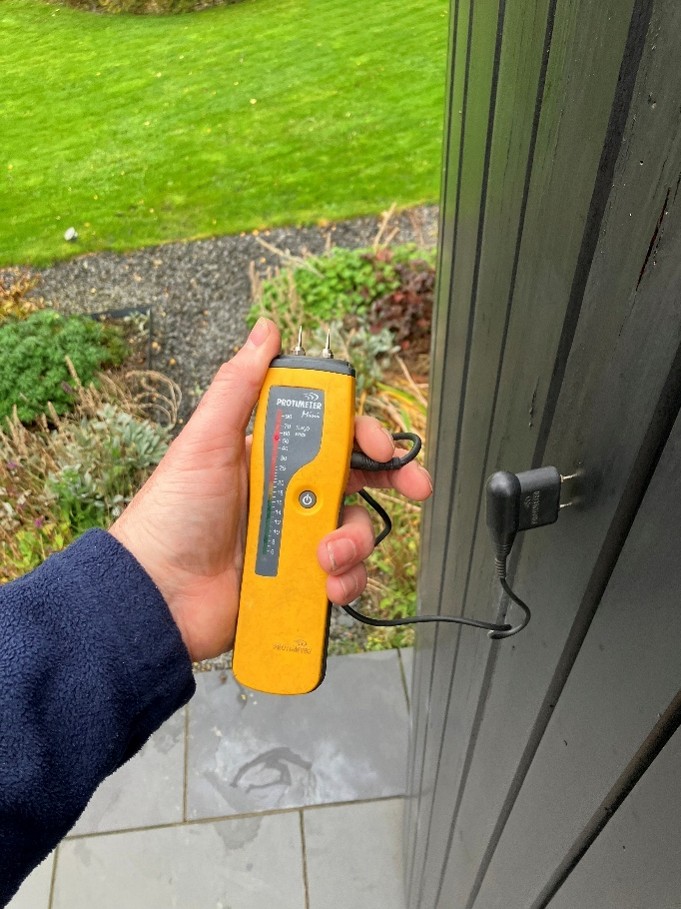
- The untreated sapwood present in the boards was susceptible to decay.
- Annual over-coating had reduced surface permeability, trapping moisture in the boards and contributing to sapwood decay.
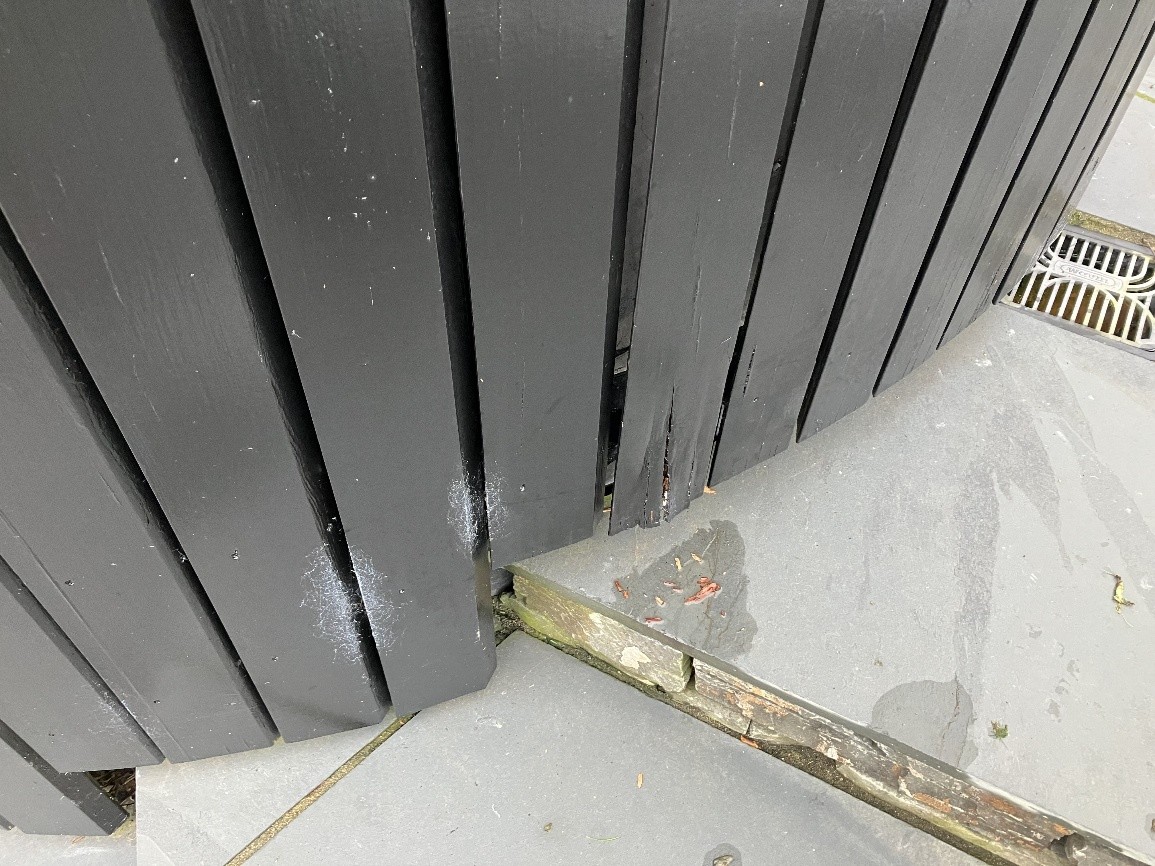
- Many boards had their ends too close to the ground, exposing them to the splash zone.
- Some board ends and edges were in contact with windowsills, creating areas of localised wetting.
- The open-joint profile was advantageous, allowing affected boards to be replaced individually.
Overall Conclusion
The TDCA inspection confirmed that the cladding defects were localised rather than systemic, allowing for a measured and proportionate response. Only boards affected by sapwood decay require replacement, while the remainder of the cladding can remain in service under a watching brief, avoiding unnecessary and costly full replacement.
Although the cladding was generally well designed and constructed, our inspection highlighted some detailing issues. The board ends were too close to the ground in many places which and some of the boards were in contact with the windowsills which should be avoided.
This highlights the importance of correct splash-zone detailing, with cladding finishes needing to be at least 200mm above ground level and adjacent surfaces designed to minimize splash-back and prolonged wetting. Addressing these issues through improved detailing and finish management will significantly reduce the risk of future moisture exposure and decay.
Although the cladding was generally well designed and constructed, localised detailing issues were identified. Board ends positioned too close to the ground and in contact with window sills had created areas of persistent wetting within the splash zone, leading to elevated moisture levels and sapwood decay. Annual re-coating had also resulted in an overly thick, low-permeability finish, further contributing to moisture retention.
This case further reinforces the benefits of using preservative-treated larch for external cladding installations where the timber falls within durability classes 3, 4 or 5. Research carried out by the Wood Protection Association (WPA) demonstrates that treatment significantly improves resistance to decay and extends service life, particularly where sapwood is present. With treated timber, the impact of over-coating and moisture retention would have been substantially reduced. WPA Field Trial extended | WPA News
Finally, the inspection confirmed that coating systems should be applied only when necessary, as per the coating manufacturer’s guidance. Over-application can reduce permeability, trap moisture within the timber and accelerate decay rather than prevent it.
For the homeowner, the outcome was reassurance and clarity. What was initially thought to require full cladding replacement was resolved through targeted remedial works, improved detailing and informed maintenance advice - saving time, cost and disruption while preserving the majority of the existing cladding.
"Engaging TDCA’s Inspection & Expert Witness Service gave us confidence and clarity when concerns arose with our timber cladding. The team’s independent assessment identified the root cause of the issues, provided practical, actionable recommendations, and confirmed that only a small portion of the boards required replacement. Thanks to TDCA, we avoided unnecessary full replacement, saved significant cost, and are now equipped to manage ongoing maintenance effectively”
Further support and guidance
Read more about our Inspection Services here Timber Decking and Cladding Inspection and Expert Witness Service
Read more about cladding best practice here Timber Cladding | Wood Cladding
Download the Timber Cladding Handbook here Publications