
FAQ: Do I need planning permission to replace my timber deck?
Friday, October 09, 2026
Do I need planning permission to replace my timber deck?
In many cases, no. If you are replacing an existing timber deck on a like-for-like basis, the work may be considered maintenance or repair rather than new development. However, the answer depends on the size of the project, the height of the deck and whether the existing structure is lawful.
Does the 300mm height rule apply?
Under current planning rules in England, decking or a raised platform that is more than 300mm above ground level is generally not permitted development and may require planning permission.
The 300 mm threshold was introduced on 1 October 2008 as part of changes to householder permitted development rights.
How is the 300 mm height measured?
This is one of the most common causes of confusion.
The height is measured vertically from the natural ground level immediately beneath the deck to the top surface of the decking. It is not measured to the underside of the joists or supporting structure.
On sloping ground, there is no single measurement for the whole deck. Instead, the height should be assessed at different points across the deck. If any part of the deck is more than 300 mm above the natural ground directly below it, that part of the deck may be regarded as a raised platform.
For example, a deck built on a gentle slope may be almost at ground level at one end but 500 mm above the ground at the other. In this situation, the deck is likely to be considered a raised platform for planning purposes.
What if my existing deck is already over 300 mm high?
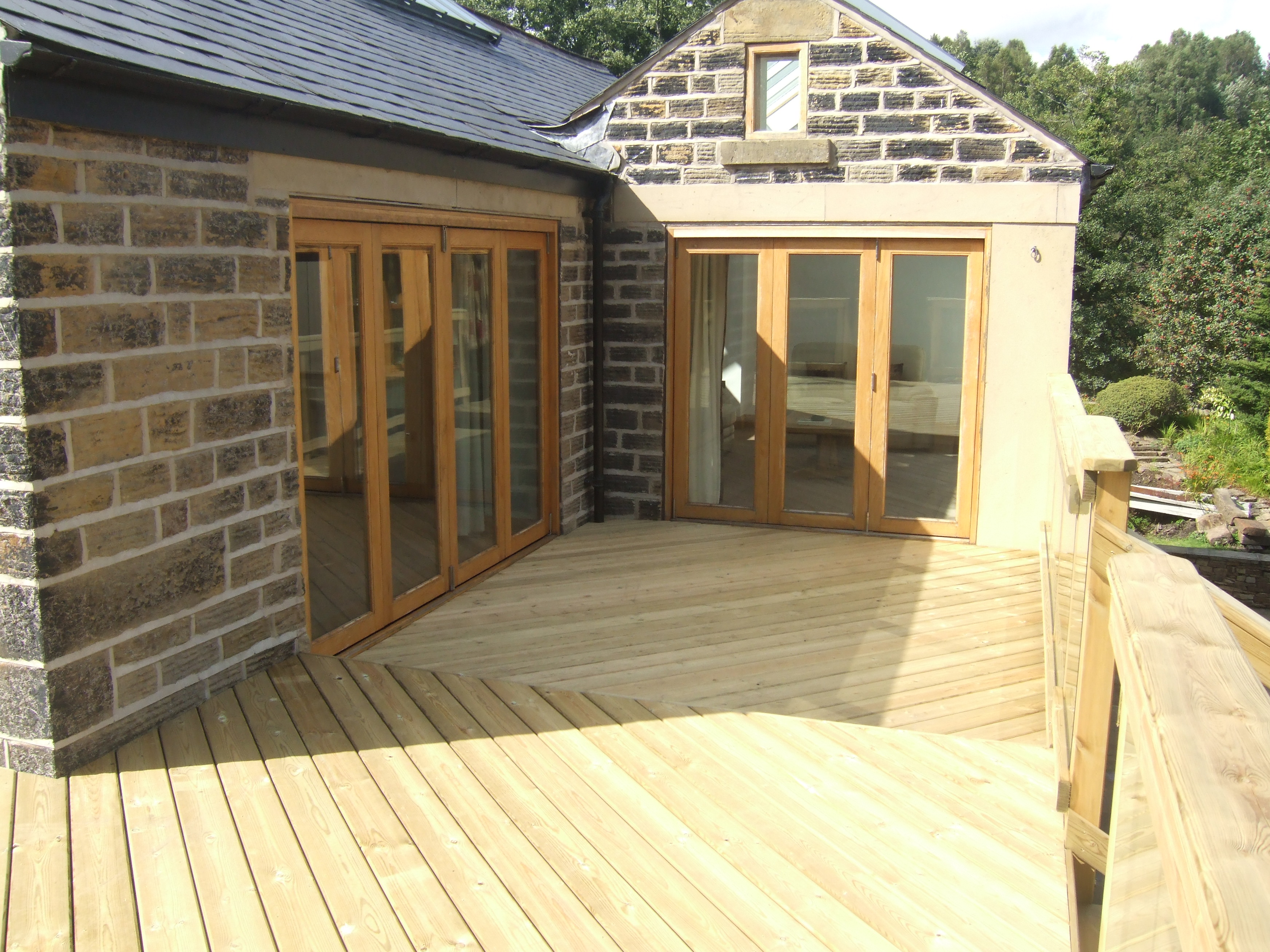
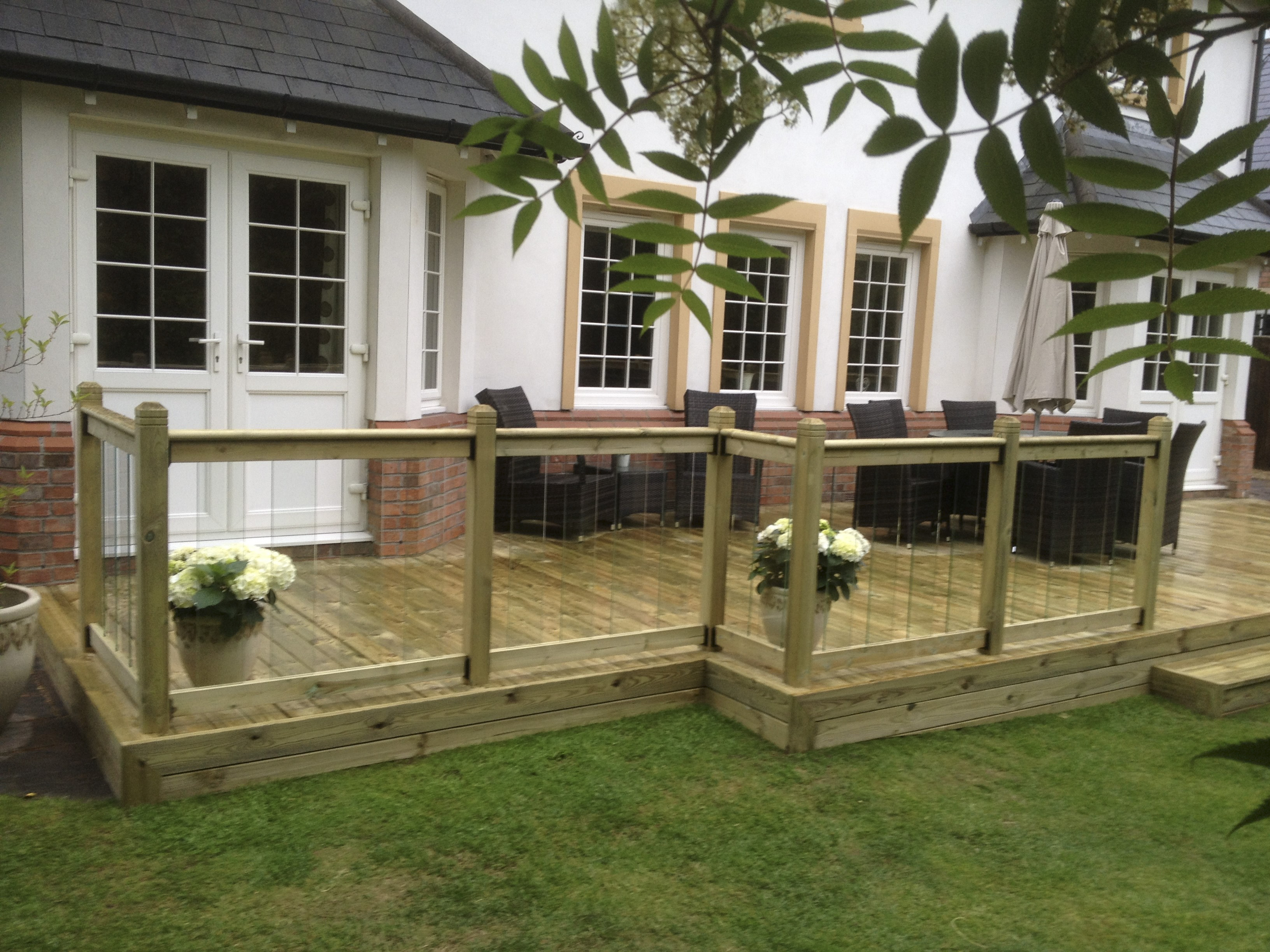
Many older decks exceed 300 mm in height. If your deck was lawfully built, or has become lawful through the passage of time, simply repairing or renewing it does not automatically mean planning permission is required.
However, completely removing the existing deck and constructing a new one may be regarded as new operational development, in which case the current planning rules are likely to apply.
My deck was built before 2008. Does the 300mm rule still affect me?
Not necessarily.
Decks built before 1 October 2008 were assessed under the planning rules in force at that time. Although there was no specific 300mm threshold, some raised decks still required planning permission depending on their size, height and impact.
If an older deck has existed for many years without enforcement action, it may now be lawful through the passage of time.
What is the 10-year rule?
The 10-year rule is an enforcement rule, not a planning permission.
It means that if development requiring planning permission has been substantially completed and the local planning authority has not taken enforcement action within the relevant time period, the development may become lawful through the passage of time.
For most developments completed on or after 25 April 2024, the enforcement period is 10 years.
However, for operational development, such as a timber deck that was substantially completed before 25 April 2024, transitional provisions generally preserve the previous four-year enforcement period.
This means many older decks that were built without planning permission may nevertheless now be lawful because they have existed for many years without enforcement action.
It is important to remember that this lawful status relates to the existing deck. Completely removing it and constructing a new deck may be regarded as new development, requiring assessment under the current planning rules.
Is replacing a few boards the same as rebuilding the deck?
No.
Replacing individual boards, joists or other deteriorated components is generally regarded as maintenance or repair.
By contrast, demolishing the existing deck and constructing an entirely new structure may be considered new development, particularly where the deck exceeds 300 mm above ground level or its size or design changes.
What if I want to make the deck bigger or higher?
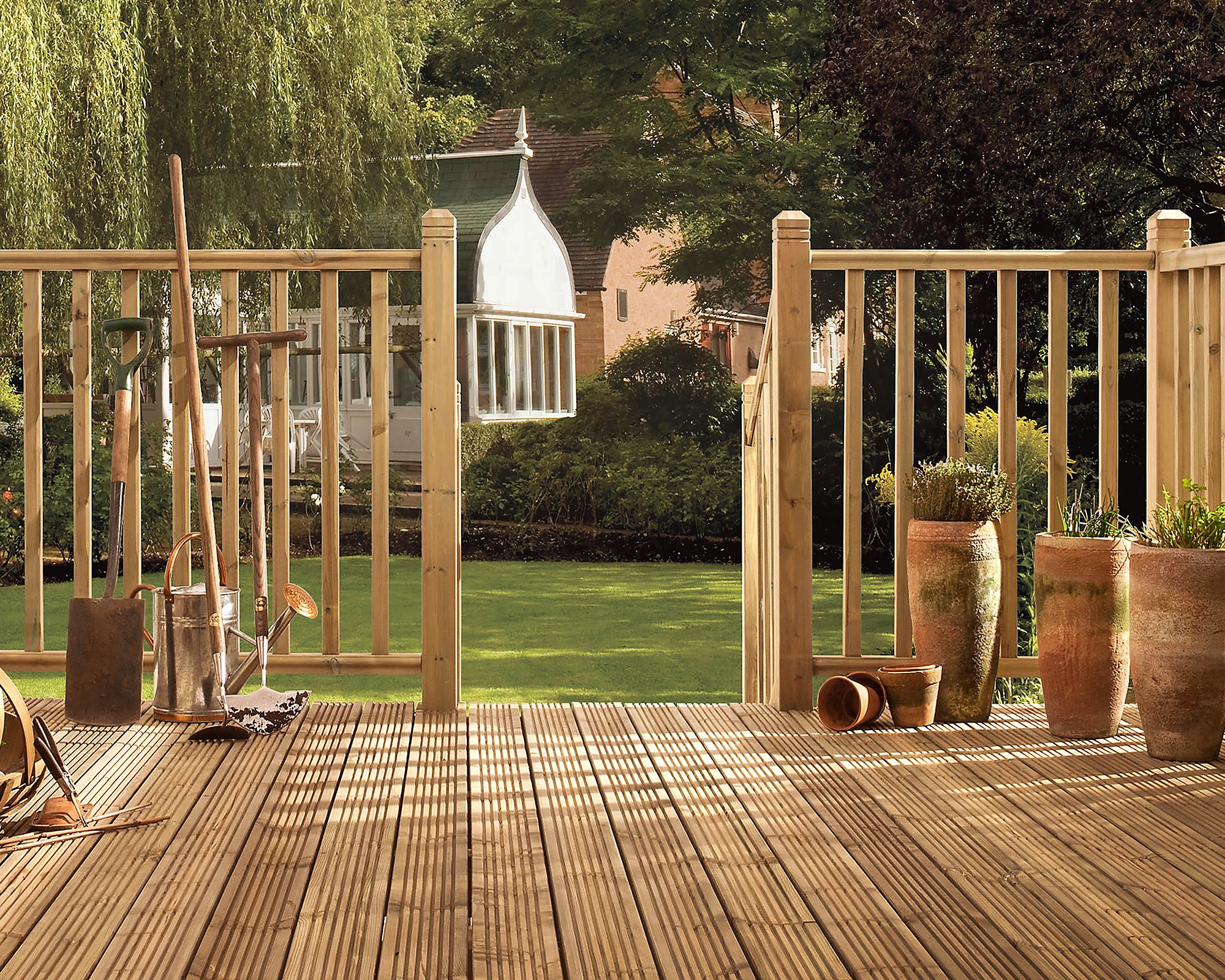
Increasing the size, height or footprint of an existing deck is more likely to require planning permission. This is especially true if the finished deck will be more than 300 mm above ground level.
Does this apply everywhere in the UK?
No. Planning legislation differs between England, Scotland, Wales and Northern Ireland. The guidance above relates to England. If your property is elsewhere in the UK, you should check the relevant planning legislation or contact your local planning authority.
Should I check with my local planning authority?
If you are unsure whether your project is a repair, a replacement or new development, or if your existing deck is over 300 mm above ground level, it is sensible to seek advice from your local planning authority before work begins.
Need technical guidance on timber decking?
The Timber Decking & Cladding Association (TDCA) provides independent technical guidance on the design, specification, construction and maintenance of timber decking. If you have a technical or compliance query, please get in touch with our expert team.