
Does Your External Timber Cladding Measure Up?
Monday, December 15, 2025
Why Size Matters
The Timber Decking and Cladding Association (TDCA) continues to receive enquiries that highlight one ongoing issue: cladding profiles that don’t conform to established best practice.
Getting the specification right at the design stage is critical to the performance and longevity of any external timber cladding project and the dimensions of the boards themselves play a major part in that.
Recently, we were approached with an enquiry seeking a 22 x 219 mm European larch shiplap cladding - a board with a width-to-thickness ratio of 10:1. This is outside the limits set by BS8605-1:2014, which recommends ratios between 4:1 and 6:1, and limits board width to 150 mm (except timbers such as Accoya®, which can extend to 195 mm due to its ‘very small movement’ classification).
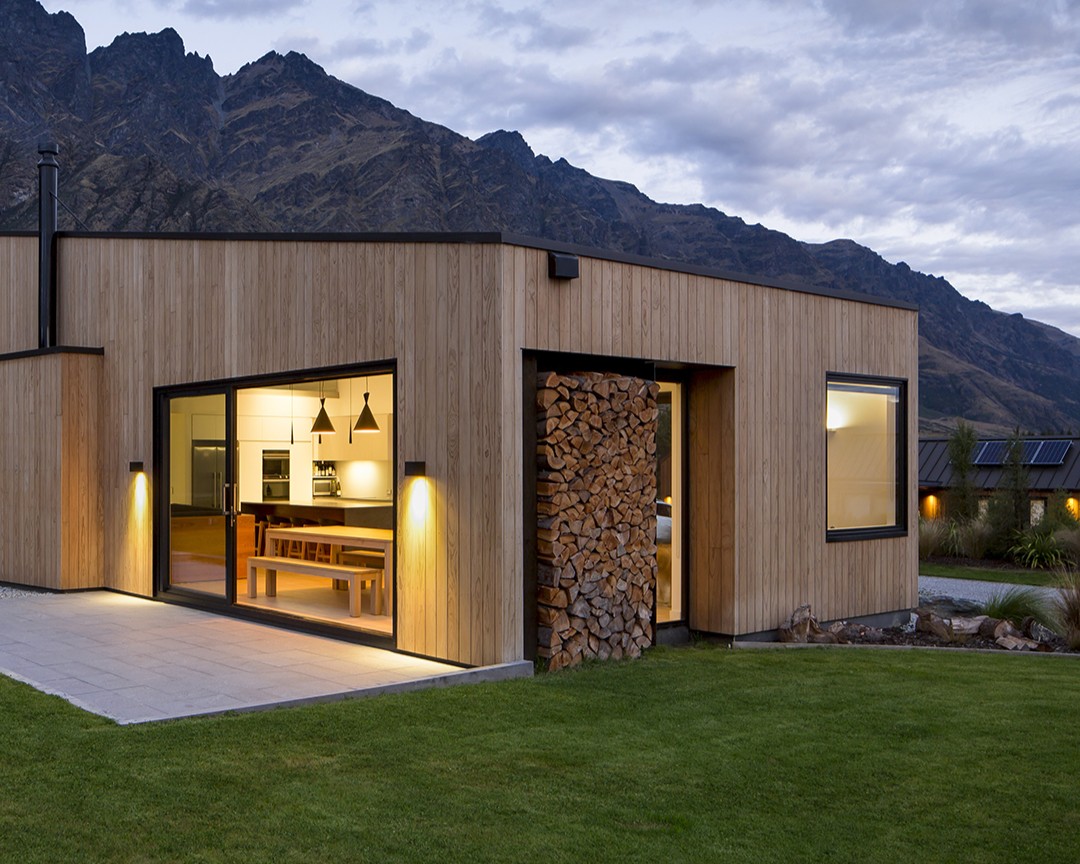
Thermory Radiata C3 Jack’s Point NZ Ben Hudson architects | Photo credit Sarah Rowlands
What is more concerning is that they had received 3 quotations for the project without anyone flagging that the requested profile was non-compliant. It’s a reminder that unless all parties - designers, specifiers, and suppliers understand and apply the correct standard, problems are likely to surface later down the line.
Understanding BS8605-1:2014
BS8605-1:2014 sets out detailed guidance for the manufacture and specification of external timber cladding, with the aim of minimising issues caused by moisture-related movement. It describes the key profile characteristics needed to help cladding perform as intended and is relevant to both manufacturers and specifiers to ensure buyer and supplier requirements are aligned.
The standard’s guidance is based on extensive research and was developed by Dr Ivor Davies, one of the UK’s leading timber cladding specialists, with input from an expert subcommittee. Although a Part 2 (covering installation) was never published, other trusted documents now fill that gap, including the Timber Cladding Handbook (produced by TDUK and TDCA).
Accommodating natural movement
Timber is a natural material that expands and contracts predictably across the grain as its moisture content changes with the seasons – this is referred to as movement. Correct profile design and installation will ensure that natural movement is accommodated but deviations from best practice could result in distortion issues.
To manage this, BS8605 recommends width-to-thickness ratios between 4:1 and 6:1 for all profiles. A ratio of greater than 6:1 can be used with very small movement class timbers graded to class J5 (BS EN 942) eg Accoya. A ratio of less than 4:1 can also be used providing the increased material and installation costs (relative to wider boards) are acceptable. For standard species, exceeding those limits significantly increases the risk of performance issues.
Profiles such as tongue and groove (T&G) are a particular consideration because the boards are interlocked. The standard limits T&G board widths to 125 mm unless a very low movement timber is used. If boards are too wide or the tongue too narrow, expansion and contraction can cause tongue disengagement or the cladding to pull away from the wall. For example, TDCA investigated one case where medium-movement Scots pine boards (144 mm wide with an 8 mm tongue) had failed due to these very issues.
Room for Exception
There are occasions where profiles that fall outside BS8605’s dimensional guidance may still be suitable but only where robust, independent test evidence supports their performance. Without such data, is it worth taking the risk? The TDCA advises that any deviation from standards should always be supported by technical documentation or certification.
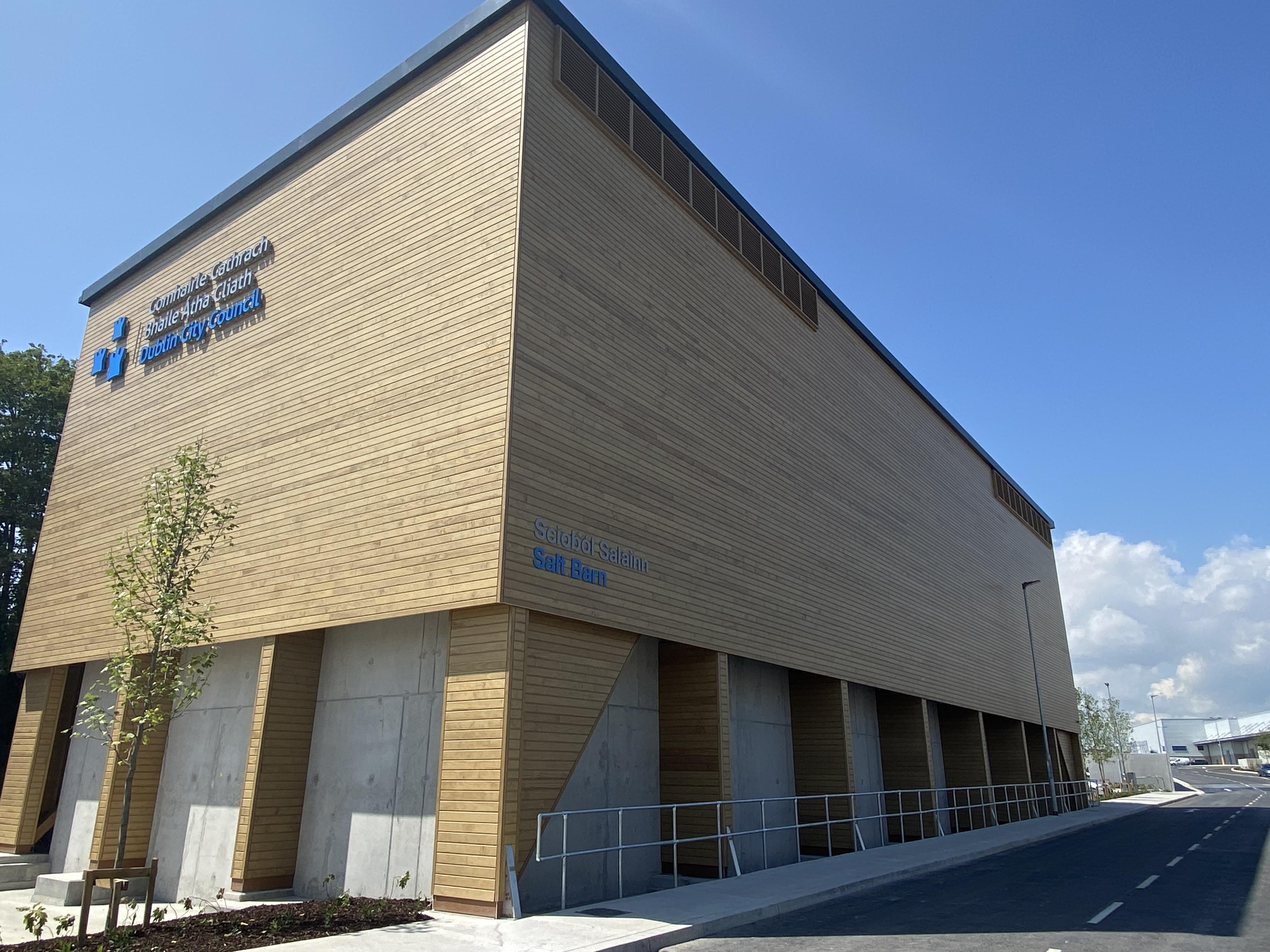
Pic of the Accoya Cladding Dublin Depot
Beyond Board Size – Detailing Matters Too
While proportion and profile are critical, other detailing factors have a major influence on the lifespan of cladding systems.
Timber cladding in the UK is designed as a rainscreen system, which means it must be installed over a drained and ventilated cavity to allow moisture to escape. Adequate ventilation openings should be provided at the top and bottom of the cladding, and support battens (or counter battens for vertical cladding orientation) should maintain a continuous drainage path over a waterproof, breathable membrane.
The National House Building Council (NHBC) has previously reported that many cladding systems underperform due to a lack of drainage and ventilation detailing, inappropriate film-forming coatings that trap moisture, and poor fixing practices. These are all issues that can easily be prevented with correct design and adherence to established best practice.
Getting It Right
The good news is that moisture-related problems and movement failures are entirely avoidable. By following the dimensional and detailing guidance set out in BS8605-1:2014 and TDCA’s Timber Cladding Handbook, designers and installers can ensure their projects deliver long-term performance and visual appeal.
Alongside its technical resources, TDCA’s CladMark quality assurance scheme identifies products and installers that meet rigorous performance and quality standards verified through yearly audits. Choosing CladMark approved materials and installers provides confidence that:
- Products are manufactured under stringent quality management systems.
- Installers are experienced and trained to fit cladding correctly, ensuring the cladding delivers optimum longevity, performance, and durability.